
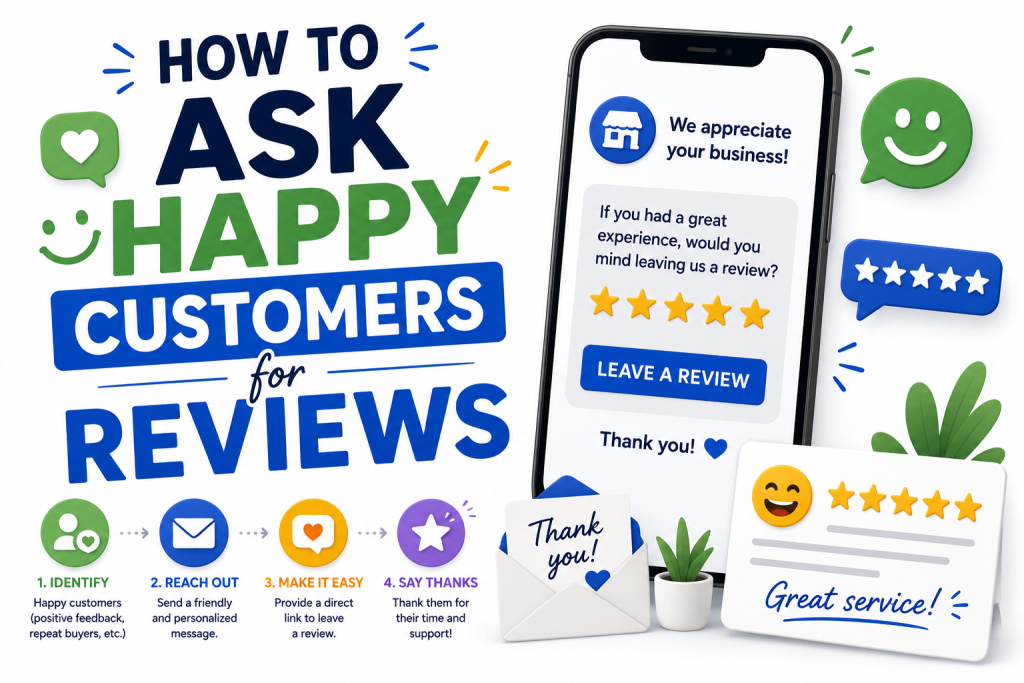
Happy customers can become some of the strongest voices for your business. When someone has a genuinely good experience with your product or service, their feedback can help potential customers understand what your business is really like.
The challenge is that satisfied customers do not always think about leaving a review on their own. They may be busy, forget after the purchase, or simply not know that their feedback would be useful.
A simple and respectful review request can make a difference.
The key is to ask at the right moment, make the process easy, and allow customers to share their genuine opinions in their own words.
Why Ask Happy Customers for Reviews?
A satisfied customer already has a real experience with your business.
Their review can explain what they liked, what worked well, and what made the experience worthwhile.
Potential customers often find this type of feedback useful because it comes from someone who has actually interacted with the business.
For the company, reviews can also provide valuable insight into customer satisfaction.
A customer may praise something your team does not realize is particularly important to buyers.
Identify the Right Moment to Ask
Timing can have a major effect on whether customers respond.
A review request sent too early may not make sense.
For example, if someone has just placed an order, they may not have received or used the product yet.
A better time may be after delivery.
For a service business, the right moment could be after the service has been completed.
For a restaurant, it may be shortly after the customer’s visit.
The best timing depends on when the customer has enough experience to give meaningful feedback.
Ask When the Customer Shows Satisfaction
Happy customers often provide natural signals that they are satisfied.
They may say:
“Everything was perfect.”
“Thank you for the quick help.”
“I really liked the service.”
“This was exactly what I needed.”
These moments can create a natural opportunity to invite feedback.
You can respond with something simple such as:
“We are glad to hear that. If you have a moment, we would appreciate hearing about your experience in a review.”
The request feels connected to the conversation rather than appearing as a random promotion.
Keep the Request Simple
Customers do not need a long explanation.
A short message is often enough.
For example:
“We are glad you enjoyed your experience. If you have a moment, we would love to hear your honest feedback.”
Then provide the appropriate review option.
The customer should immediately understand what you are asking.
Make It Easy to Leave a Review
Even satisfied customers may abandon the process if it takes too much effort.
Make the path as simple as possible.
If the review platform provides an appropriate direct link, use it.
Avoid sending customers to a page where they have to search for your business.
The easier the process, the less friction there is between deciding to leave feedback and actually submitting it.
Tell Customers Why Their Feedback Matters
People are more likely to participate when they understand the purpose.
You can explain that reviews help the business improve and help future customers make informed decisions.
For example:
“Your feedback helps us continue improving and gives future customers a better idea of what they can expect from us.”
Keep the explanation honest and concise.
Ask for Honest Feedback
The goal should be genuine customer feedback.
Instead of saying:
“Please leave us a five star review.”
consider asking:
“We would appreciate your honest feedback about your experience.”
This gives the customer freedom to describe what they actually experienced.
It also makes the request feel less promotional.
Let Customers Choose Their Own Words
Do not give customers a review that they are expected to copy.
A genuine review should come from the customer’s own experience.
You can encourage them to mention what they found useful, enjoyable, or helpful, but let them decide how to describe it.
This creates more natural feedback.
Use Email to Ask for Reviews
Email can work well when customers already receive order confirmations, service updates, or follow up messages from your business.
A review request can be included after the customer has completed the relevant experience.
Keep the email focused.
Thank the customer.
Mention the completed purchase or service.
Ask for honest feedback.
Provide a simple way to leave the review.
Avoid overwhelming the customer with unrelated offers.
Use Text Messages When Appropriate
For businesses that already communicate with customers through text messages, SMS can be a convenient review channel.
Keep the message short.
For example:
“Thank you for choosing us. We hope you enjoyed your experience. If you have a moment, we would appreciate your honest feedback.”
Then provide the appropriate review option.
Do not send repeated messages if the customer does not respond.
Ask In Person
Local businesses can also ask for reviews during face to face interactions.
A staff member might say:
“We are happy to hear that you enjoyed your experience. If you have a moment later, we would appreciate your honest feedback.”
This works best when the request feels natural.
Employees should not pressure customers or make them feel that a positive review is expected.
Ask After a Problem Has Been Resolved
A customer who initially experienced a problem may become satisfied after the business resolves it properly.
If the customer confirms that the issue has been handled, you can invite them to share their overall experience if appropriate.
The focus should remain on the customer’s satisfaction, not on asking them to change their previous opinion.
Create a Consistent Review Request Process
Do not rely entirely on employees remembering to ask.
Build review requests into the customer journey.
For example:
Customer completes purchase.
Product or service is delivered.
Business checks whether everything went well.
Customer receives an invitation to share feedback.
Reviews are monitored.
Feedback is shared with the team.
This creates a repeatable process.
Train Employees to Ask Naturally
If your business has a team, employees may interact with customers more frequently than management.
Give them simple guidance.
They should know:
When to ask
How to introduce the request
Where to direct customers
What language to avoid
When not to ask
The objective is not to make employees recite a script.
Teach them the purpose and let them communicate naturally.
Do Not Pressure Customers
A happy customer should never feel obligated to leave a review.
Avoid repeatedly asking after someone declines.
Do not imply that good service depends on receiving a positive review.
Do not make customers feel guilty.
A respectful request protects the relationship even when the customer chooses not to leave feedback.
Avoid Asking for a Specific Rating
If you want honest reviews, avoid directing customers toward a particular rating.
A customer should be able to decide whether their experience deserves three stars, four stars, five stars, or another rating.
The value of a review comes from its authenticity.
Businesses should focus on earning positive experiences rather than demanding positive ratings.
Be Careful With Review Incentives
Some businesses consider giving customers discounts or rewards in exchange for reviews.
The rules surrounding incentives vary between platforms.
If you are considering an incentive, check the applicable platform policies first.
Most importantly, never make a reward dependent on leaving a positive review.
The purpose of customer feedback should remain genuine.
Follow Up Once If Appropriate
Customers sometimes intend to leave a review but forget.
A single polite reminder can be reasonable.
For example:
“We wanted to follow up on our previous message. If you have a moment, we would appreciate hearing about your experience.”
Avoid sending multiple reminders.
Too many requests can turn a positive customer experience into an annoying one.
Thank Customers Who Leave Reviews
When someone takes the time to write a review, acknowledge it.
A simple thank you shows that the business values customer feedback.
If the review mentions something specific, respond to that detail.
For example, if the customer praises your fast service, thank them for recognizing the team’s effort.
Personal responses can make customers feel appreciated.
Learn From What Happy Customers Say
Positive reviews are more than promotional content.
They can reveal what customers value most.
Perhaps customers repeatedly mention:
Friendly employees
Fast delivery
Simple ordering
Helpful support
Product quality
Easy booking
Clear communication
These recurring themes can help you understand your strongest customer experience features.
Share this information with your team.
Do Not Ignore Constructive Feedback
A happy customer may still mention something that could be improved.
For example, a customer might say:
“I loved the service, but the booking process was confusing.”
That is useful feedback.
Do not focus only on the positive part.
Look for opportunities to make the overall experience better.
Avoid Selective Review Practices
Businesses should aim for a fair and genuine feedback process.
Do not create a system designed to hide unhappy customers while sending only satisfied customers toward public reviews.
A better approach is to invite appropriate customers consistently and allow them to provide honest feedback.
This creates a more trustworthy review profile.
Make Review Requests Part of Customer Service
The best review strategy does not feel separate from customer service.
After helping a customer, completing an order, or delivering a service, asking for feedback can be a natural final step.
The process becomes:
Serve the customer well.
Confirm the experience went smoothly.
Invite honest feedback.
Listen to what they say.
Improve where necessary.
This approach makes reviews part of an ongoing customer relationship.
Measure Your Review Request Process
Businesses can track how their review requests perform.
You might monitor:
Number of requests sent
Number of customers responding
Timing of requests
Communication channel
Review volume
Common customer comments
This can help identify what works best.
For example, you may discover that customers respond more often when the request is sent shortly after completing a service.
Keep Improving the Process
There is no single perfect way to ask for reviews.
Different customers respond to different communication methods.
Test practical changes to timing, wording, and communication channels while respecting customer preferences and platform rules.
Keep the best performing approach and remove unnecessary steps.
The objective is to make it easier for genuinely satisfied customers to share their experiences.
Examples of Natural Review Requests
Short Request
“We are glad you enjoyed your experience. If you have a moment, we would appreciate your honest feedback.”
After a Purchase
“Thank you for choosing us. We hope you are happy with your purchase. If you have a moment, please consider sharing your honest experience.”
After a Service
“Thank you for trusting our team. We would love to hear how your experience went. Your honest feedback is greatly appreciated.”
Friendly Request
“We are happy to hear that everything went well. If you have a moment, feel free to share your experience with us.”
Final Thoughts
Asking happy customers for reviews does not have to be complicated.
The most effective approach is usually simple and respectful.
Choose the right moment, make the process easy, ask for honest feedback, and allow customers to use their own words.
Do not pressure customers for a specific rating or make them feel obligated to participate.
Most importantly, continue delivering experiences that customers genuinely appreciate.
A review request can open the door to feedback, but the customer experience is what gives customers something worth sharing.
When businesses combine good service with a thoughtful review request process, they can create more opportunities for genuine customer feedback while strengthening trust with future customers.
Frequently Asked Questions
How should I ask a happy customer for a review?
Keep the request short and friendly. Thank them for choosing your business and invite them to share their honest experience.
When is the best time to ask for a review?
Ask after the customer has had enough time to experience your product or service. The ideal timing depends on your business and customer journey.
Should I ask customers for five star reviews?
If you want genuine feedback, ask customers to share their honest experience rather than requesting a specific rating.
Can I ask for reviews in person?
Yes. A polite request during a natural conversation can work well, especially for local businesses and service providers.
Can I ask for reviews by email?
Yes. Email can be useful after a completed purchase, delivery, appointment, or service.
Can I ask customers for reviews through SMS?
Yes, if SMS is an established communication method with the customer. Keep the message short and avoid repeated requests.
Should I give customers a script for their review?
It is better to let customers use their own words. You can invite them to describe their experience without telling them exactly what to write.
How can I make it easier for customers to leave reviews?
Provide clear instructions and, where appropriate, a direct path to the relevant review page. Avoid unnecessary steps.
What if a happy customer does not leave a review?
Do not take it personally. Customers may be busy or forget. One polite reminder can be appropriate, but avoid repeated requests.
Can I offer a discount for a review?
Review incentives may be restricted by certain platforms. Check the applicable rules before offering an incentive, and never make a reward dependent on a positive rating.
Should I respond to reviews from happy customers?
Yes. A simple thank you can show that you appreciate the customer’s effort and value their feedback.
Why are honest reviews important?
Honest reviews give potential customers realistic information and provide businesses with genuine insight into their customer experience.
Can happy customer reviews help my reputation?
Yes. Genuine positive feedback can provide social proof and help potential customers understand what others appreciate about your business.
Should I ask every customer for a review?
Businesses can create a consistent review request process rather than relying only on selected customers. The important thing is to follow applicable platform rules and keep the request voluntary.
What should I do with feedback from happy customers?
Look for repeated themes. Positive comments can show what your business does well, while constructive suggestions can reveal areas that still need improvement.