
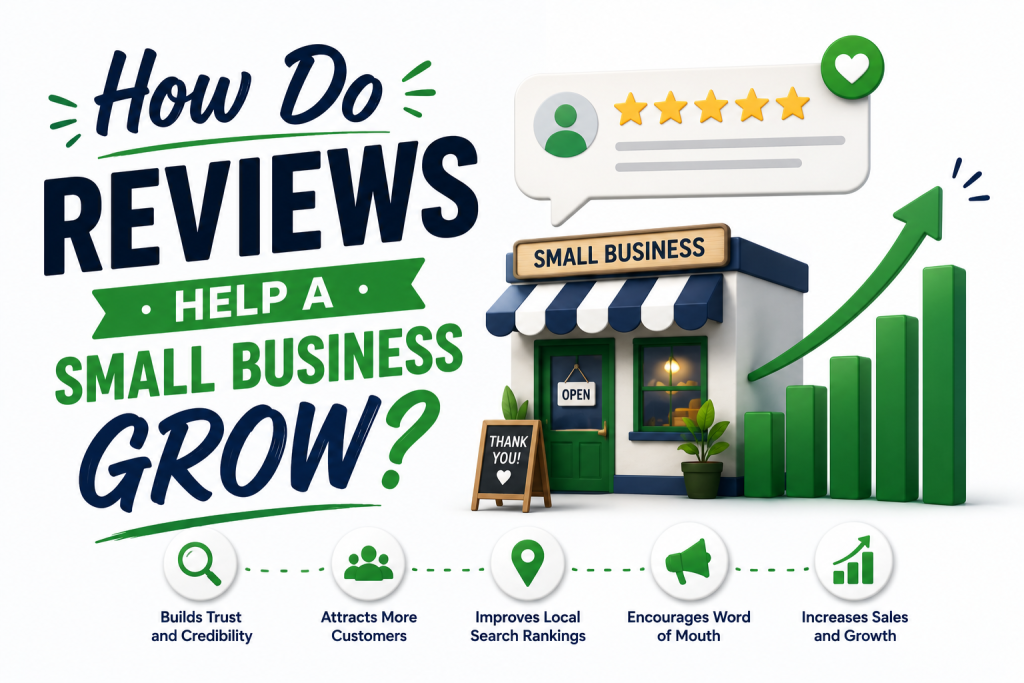
For a small business, earning customer trust can be one of the biggest challenges. People may discover a business through search, social media, advertisements, referrals, or local listings, but many still want to know what other customers think before making a decision.
This is where online reviews can make a meaningful difference.
Reviews give potential customers a glimpse into other people’s experiences. A business with helpful, genuine, and recent customer feedback can appear more trustworthy and established. Reviews can also help businesses understand customer expectations, improve their services, and create stronger relationships with existing customers.
For small businesses that are competing with larger companies, a strong review presence can become an important part of their overall growth strategy.
Reviews Help Build Customer Trust
Trust is one of the first things a customer looks for before buying from a business they do not know.
A website can explain what a company sells, but customer reviews provide another perspective. Potential buyers can see comments about service quality, product experience, communication, delivery, customer support, or other aspects of the buying journey.
When people see consistent feedback from customers, they may feel more comfortable considering the business.
This is especially important for small businesses because they may not have the same brand recognition as larger companies. Reviews can help reduce uncertainty and give new customers additional reasons to consider a business.
Reviews Can Influence Buying Decisions
Customers often compare several businesses before making a purchase. Price is important, but it is not always the only deciding factor.
A customer may compare ratings, read recent reviews, look at how a business responds to complaints, and check whether other customers mention the specific product or service they need.
Positive reviews can therefore influence the final decision.
For example, imagine two local businesses offering similar services at similar prices. One has very little customer feedback while the other has a well maintained profile with detailed customer experiences. The second business may appear more established and trustworthy.
Reviews do not guarantee a purchase, but they can help remove some of the hesitation that prevents customers from taking the next step.
Reviews Can Help Small Businesses Stand Out
Large companies often have strong brand recognition, large advertising budgets, and years of market visibility. Small businesses usually have to work harder to get noticed.
A healthy review profile can help a smaller company present itself more confidently.
When customers search for businesses in their area or compare different providers, reviews can become one of the factors they consider. A business that consistently receives positive customer feedback may have a better opportunity to capture attention.
This is particularly useful for businesses that depend heavily on local customers, such as restaurants, salons, agencies, consultants, repair services, retailers, and professional service providers.
Reviews Provide Social Proof
People naturally look for evidence that others have had a good experience before spending their own money.
Customer reviews provide this form of social proof.
Instead of relying entirely on what a business says about itself, potential customers can see experiences shared by other people. Detailed reviews can be particularly useful because they may explain why a customer selected the business and what they liked about the experience.
Social proof can make a new customer feel less uncertain about trying a business for the first time.
Reviews Can Support Local Business Discovery
Reviews can also be valuable for businesses that depend on local search visibility.
When customers search for nearby services, they may see several businesses and compare their profiles. Ratings, review activity, business information, photos, and customer comments can all contribute to how people evaluate their options.
A business that regularly receives genuine customer feedback can maintain an active presence across its important review channels.
However, businesses should focus on providing excellent experiences first. Reviews should be a reflection of customer satisfaction rather than a substitute for it.
Reviews Help Businesses Understand Customers
Reviews are not only useful for attracting new customers. They can also provide valuable information to the business itself.
Customers may mention things that business owners do not notice during daily operations.
For example, customers might praise fast communication but complain about complicated booking procedures. They might love the product but feel that delivery updates are unclear. They could appreciate friendly employees while suggesting improvements to the checkout experience.
These comments can reveal patterns.
Instead of treating reviews simply as ratings, small businesses can use them as customer feedback. Identifying repeated comments can help owners decide which areas deserve attention.
Responding to Reviews Can Strengthen Relationships
A review is also an opportunity to communicate with customers publicly.
When someone leaves positive feedback, a thoughtful response can show appreciation. When someone leaves a negative review, a professional response can demonstrate that the business takes customer concerns seriously.
The goal should not be to argue with customers.
A useful response acknowledges the concern, provides appropriate clarification when necessary, and shows a willingness to improve. Future customers can see these interactions and form an impression of how the business treats its customers.
Good review management is therefore not simply about collecting positive ratings. It is also about how the business communicates after receiving feedback.
Reviews Can Encourage Repeat Customers
Reviews can strengthen the relationship between a business and its existing customers as well.
When customers know that their feedback is appreciated, they may feel more connected to the business. Asking for feedback after a successful experience can create another opportunity for communication.
A customer who takes the time to leave a review has already engaged with the brand beyond the original transaction.
Businesses can use this opportunity to thank customers and continue providing good service.
The focus should remain on genuine customer relationships rather than simply increasing the number of reviews.
Recent Reviews Can Keep a Business Looking Active
Customers may wonder whether a business is still active when they see an old review profile with little recent activity.
Recent customer feedback can give potential buyers a better understanding of the current customer experience.
This is particularly important for small businesses that are constantly changing their products, services, staff, processes, or customer support systems.
A business may have received excellent feedback several years ago, but potential customers may also want to know what the experience is like today.
Encouraging customers to share honest feedback over time can help maintain a more current picture of the business.
Reviews Can Help Improve Customer Experience
A strong review strategy should not end with publishing reviews. Businesses should look for patterns in customer feedback and use those insights to improve operations.
For example, if multiple customers mention slow responses, the business can review its communication process. If customers repeatedly praise a particular employee or service feature, the company can identify what is working well.
This creates a useful cycle.
Better customer experience can lead to greater customer satisfaction. Greater satisfaction can encourage more customers to share positive experiences. Those experiences can then help future customers feel more confident about choosing the business.
Reviews Can Strengthen Brand Reputation
A small business reputation is built through many customer interactions.
Reviews are one visible part of that reputation.
A consistent collection of genuine feedback can help create an overall picture of the brand. When customers repeatedly mention helpful service, good communication, quality products, or reliable delivery, those themes can become associated with the business.
Over time, this can support stronger brand recognition.
Businesses should remember that reputation is not created by ratings alone. Customer service, product quality, communication, transparency, and reliability all contribute to the overall customer experience.
How Small Businesses Can Get More Reviews
The most sustainable approach is to make it easy for satisfied customers to share honest feedback.
Businesses can ask customers for reviews after a completed purchase or successful service experience. Review requests can be included in follow up emails, receipts, customer service messages, or other appropriate communication.
The request should be simple and respectful.
Businesses should also avoid pressuring customers to leave a specific rating or asking only for positive feedback. The goal is to collect genuine customer experiences.
A simple message such as asking a customer to share their experience can be enough.
Businesses should also make sure customers know where they can leave their feedback. Providing a direct and convenient path can remove unnecessary friction from the process.
Why Reviews Matter for Long Term Growth
Reviews are not a shortcut to business success. They work best alongside good products, reliable service, effective customer support, and a clear brand strategy.
For a small business, however, reviews can support several important areas at the same time.
They can build trust with new customers, provide social proof, support local discovery, reveal customer expectations, strengthen relationships, and provide useful feedback for improving the business.
The biggest value comes when reviews become part of a broader customer experience strategy.
A business that consistently delivers good experiences and encourages customers to share honest feedback can gradually build a stronger reputation. That reputation can help the business compete for attention, earn customer confidence, and create opportunities for sustainable growth.
Final Thoughts
So, how do reviews help a small business grow?
They help customers feel more confident, give businesses valuable feedback, create social proof, support reputation building, and provide another way for potential customers to evaluate a company.
For small businesses, every customer experience matters. A genuine review can turn that individual experience into useful information for future customers.
The most effective approach is simple: focus on delivering a great customer experience, make it easy for customers to share honest feedback, respond professionally, and use what customers say to keep improving.
When reviews reflect real customer experiences, they can become a valuable part of a small business growth strategy.
Frequently Asked Questions
Do reviews really help small businesses grow?
Yes. Reviews can help small businesses build customer trust, influence buying decisions, strengthen their reputation, and understand what customers value. They can be especially useful for businesses competing against larger or more established brands.
Why are reviews important for small businesses?
Reviews provide social proof and help potential customers understand what it may be like to buy from a particular business. They can also provide feedback that helps owners improve products, services, and customer support.
Can positive reviews increase sales?
Positive reviews can contribute to customer confidence and may influence purchasing decisions. However, reviews are only one part of the buying process. Pricing, product quality, service, availability, and customer needs also affect whether someone makes a purchase.
How can a small business get more customer reviews?
A business can politely ask customers to share honest feedback after a purchase or completed service. Review requests can be included in follow up communication, receipts, emails, or customer support messages.
Should businesses ask customers for positive reviews?
Businesses should encourage customers to share honest feedback rather than asking them to provide a specific rating. Authentic feedback is more valuable for building long term customer trust.
Do negative reviews hurt a small business?
Negative reviews can affect customer perception, but one negative review does not automatically damage a business. A professional response and genuine effort to resolve customer concerns can show potential customers that the business takes feedback seriously.
How should a small business respond to negative reviews?
A business should remain professional, acknowledge the customer’s concern, avoid arguments, and provide an appropriate way to continue the conversation when necessary. The response should focus on solving the issue rather than defending the business aggressively.
Can reviews help a new business?
Yes. New businesses often have limited brand recognition, so genuine customer reviews can provide useful social proof. Reviews can help potential customers feel more comfortable considering a business they have not used before.
How often should a business ask for reviews?
There is no universal schedule. Businesses should request feedback after genuine customer interactions and avoid repeatedly asking the same customer. A natural and respectful approach is generally better than sending excessive requests.
What makes a business review trustworthy?
Detailed experiences, natural language, specific observations, and consistent feedback can make reviews more useful to readers. Reviews are most valuable when they represent genuine customer experiences.
Can reviews help improve customer service?
Yes. Reviews can reveal recurring customer concerns and highlight areas that are working well. Businesses can analyze this feedback and use it to improve communication, service processes, products, or customer support.
Are reviews important for local businesses?
Yes. Reviews can be particularly important for local businesses because customers often compare nearby companies before deciding where to buy. A well maintained review presence can help a local business build confidence among potential customers.
Should small businesses respond to positive reviews?
Yes. Thanking customers for their feedback can show appreciation and encourage stronger customer relationships. Responses can also demonstrate that the business pays attention to its customers.
Can a small number of reviews still be useful?
Yes. A smaller collection of genuine, detailed reviews can provide useful information. Businesses should focus on delivering good experiences and gradually encouraging customers to share honest feedback rather than focusing only on reaching a specific number of reviews.
What is the best way to build a strong review reputation?
Start with a good customer experience. Make it easy for customers to provide honest feedback, respond professionally to reviews, monitor recurring concerns, and use customer insights to improve the business. A strong reputation develops through consistent customer experiences over time.