
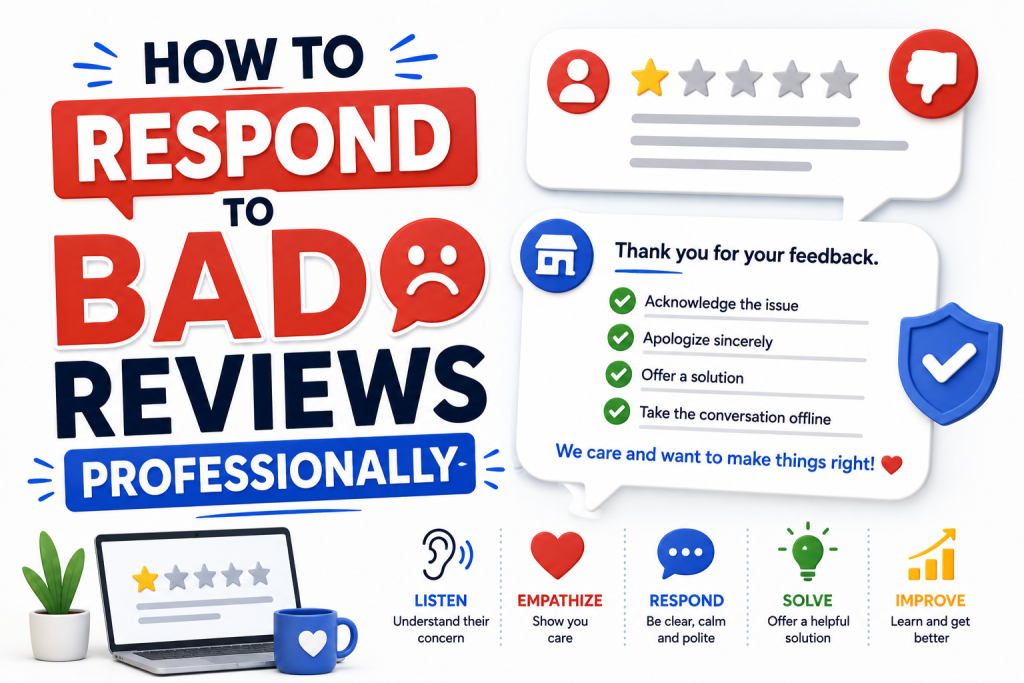
Getting a bad review is never easy for a business. Even when a company has many satisfied customers, an unhappy customer can leave negative feedback that affects how potential customers view the brand.
The natural reaction may be to defend the business immediately. However, responding emotionally can make the situation worse.
A professional response can show that the business listens to customers, takes concerns seriously, and is willing to find a reasonable solution.
The goal is not to win an argument with the reviewer. The goal is to handle the situation responsibly while showing future customers that your business knows how to deal with criticism.
Why Bad Reviews Matter
Potential customers often read negative reviews before making a decision.
They may want to know what went wrong, whether the complaint was resolved, and how the business responded.
This means the response to a bad review can sometimes be just as important as the review itself.
A thoughtful response can demonstrate professionalism.
An angry response can create another reputation problem.
Even customers who have never interacted with your business may read these conversations when deciding whether to buy from you.
Take a Moment Before Responding
Do not respond immediately if you are angry.
A negative review can feel personal, especially when the business believes the complaint is unfair.
Give yourself time to understand what happened before writing anything publicly.
Read the review carefully.
Check the customer’s account or order information if available.
Speak with the relevant employee or team.
Look at previous communication.
Then decide how to respond.
A short delay is usually better than posting a defensive message that you later regret.
Read the Entire Review
Do not focus only on the star rating.
Read the customer’s actual comments.
Try to identify the main issue.
Was the customer unhappy with the product?
Was the service delayed?
Was communication poor?
Was there a billing problem?
Did the customer misunderstand an important policy?
Did an employee handle the situation poorly?
Understanding the specific concern helps you create a more useful response.
Acknowledge the Customer’s Concern
You do not necessarily have to agree with every part of a negative review.
However, acknowledging the customer’s experience can show that you have listened.
For example:
“We are sorry to hear that your experience did not meet your expectations.”
This does not automatically admit fault.
It simply recognizes that the customer had a disappointing experience.
That can make the response sound more professional and less defensive.
Thank the Customer for the Feedback
It may seem strange to thank someone for a bad review, but feedback can provide useful information.
A simple statement such as:
“Thank you for taking the time to share your feedback.”
can help create a calmer tone.
It also shows potential customers that the business is willing to listen.
The response should remain genuine. Avoid thanking customers in a way that sounds sarcastic or dismissive.
Apologize When the Business Made a Mistake
If the business clearly made an error, acknowledge it.
A sincere apology can be much more effective than trying to justify the mistake.
For example:
“We apologize for the delay and understand how frustrating that must have been.”
You do not need to write a long explanation.
Taking responsibility where appropriate can demonstrate accountability.
Avoid Blaming the Customer
One of the biggest mistakes businesses can make is publicly blaming the customer.
Even if the customer contributed to the situation, an aggressive response can make the business look defensive.
Avoid phrases that sound like:
“You clearly did not read our policy.”
“You are completely wrong.”
“This was your fault.”
“You should have contacted us first.”
A better approach is to explain the situation calmly and focus on what can be done next.
Keep Your Response Short
A negative review may contain several paragraphs, but your response does not need to match its length.
Long public arguments can create more opportunities for misunderstanding.
Keep the response focused on three things:
Acknowledging the concern
Providing appropriate clarification
Offering a path toward resolution
If the issue is complicated, continue the detailed conversation privately.
Do Not Reveal Private Customer Information
Never publish sensitive customer information in a public response.
Avoid sharing order numbers, phone numbers, email addresses, payment details, private conversations, or other personal information.
Even if you want to prove that the customer is wrong, public disclosure can create a much bigger problem.
Protect customer privacy while addressing the issue.
Move Detailed Conversations Offline
Some complaints cannot be resolved in a few sentences.
If the situation requires account information or detailed discussion, invite the customer to contact the business directly.
For example:
“We would like to understand what happened and see how we can help. Please contact our support team so we can review the details with you.”
This keeps sensitive information private while showing that the business is willing to help.
Respond to False or Inaccurate Claims Calmly
Sometimes a review may contain information that does not match the business’s records.
Avoid calling the customer a liar.
Instead, provide a calm clarification.
For example:
“We are unable to locate a record matching the details in this review. We would be happy to investigate further if you contact our team with additional information.”
This communicates your position without creating a public argument.
What If the Review Is Completely Fake?
Businesses may sometimes encounter reviews that appear unrelated to a genuine customer experience or violate a review platform’s rules.
Before responding, check the platform’s policies.
If the content appears to violate those rules, the business may have an option to report it.
Do not make accusations without evidence.
A professional public response can simply state that the business cannot identify the customer experience described and invite the reviewer to contact the company if they believe there has been an error.
Do Not Threaten Legal Action Publicly
Threatening customers in a review response can quickly escalate the situation.
Even when a business has legitimate concerns about defamatory or unlawful content, public threats are rarely the best first response.
Follow the appropriate platform reporting process and seek professional advice when necessary.
Keep public communication calm and factual.
Avoid Copying the Same Response
Using exactly the same response for every negative review can make your business appear automated.
Customers want to feel heard.
Try to address the specific concern mentioned in each review.
If the customer complains about delayed delivery, talk about the delivery issue.
If they mention customer service, address the communication problem.
A personalized response does not need to be long.
Respond Quickly but Thoughtfully
Businesses should avoid leaving serious complaints unanswered for long periods.
A timely response can show that the company is paying attention.
However, speed should not come at the expense of accuracy.
If you need time to investigate the issue, you can acknowledge the review first and explain that you are looking into it.
For example:
“Thank you for bringing this to our attention. We are reviewing what happened and would like to speak with you directly so we can better understand the situation.”
Turn the Complaint Into an Improvement
The best response does not end with the public comment.
Ask whether the complaint reveals something that needs to change.
If several customers complain about slow responses, review your support process.
If customers repeatedly mention confusing pricing, make the pricing information clearer.
If delivery problems happen frequently, investigate the fulfillment process.
A review can reveal a problem that internal teams may not have noticed.
Learn From Repeated Negative Reviews
One bad review may be an isolated incident.
Several similar reviews deserve more attention.
Look for repeated complaints about the same product, employee, service, location, or process.
This can help identify patterns.
Businesses should track recurring themes and discuss them internally.
The purpose is not just to protect the rating. It is to improve the customer experience that produces future reviews.
Encourage Customers to Continue the Conversation
When a problem can potentially be resolved, give the customer a clear next step.
For example:
“We would appreciate the opportunity to look into this. Please contact our customer support team so we can review the details.”
Avoid making promises you cannot keep.
If you offer a solution publicly, make sure your team is prepared to follow through.
Follow Up After Resolving the Issue
If the business successfully resolves a complaint, follow up with the customer when appropriate.
Ask whether the issue has been addressed.
Do not pressure the customer to change or remove their review.
The focus should be on resolving the actual problem.
A customer who feels heard may decide on their own whether to update their feedback.
Examples of Professional Responses
When the Business Made a Mistake
“Thank you for sharing your experience. We are sorry that the service did not meet your expectations, particularly regarding the delay you experienced. We are reviewing what happened with our team and appreciate you bringing this to our attention.”
When More Information Is Needed
“Thank you for your feedback. We are sorry to hear that your experience was disappointing. We would like to understand what happened and review the details properly. Please contact our support team so we can assist you directly.”
When the Business Cannot Verify the Experience
“Thank you for bringing this to our attention. We have been unable to identify the customer interaction described in the review. We would be happy to investigate further if you contact our team with additional details.”
When the Complaint Has Been Resolved
“Thank you for giving us the opportunity to address your concern. We are glad we were able to discuss the issue with you and work toward a resolution. Your feedback has also helped us identify an area where we can improve.”
Common Mistakes to Avoid
Businesses should avoid several common mistakes when responding to bad reviews.
Do not insult the customer.
Do not threaten the reviewer.
Do not reveal private information.
Do not argue about every detail.
Do not write while angry.
Do not copy the same response everywhere.
Do not make unrealistic promises.
Do not pressure customers to remove negative feedback.
Do not blame customers publicly.
Do not ignore serious complaints.
Avoiding these mistakes can protect the business from turning a small complaint into a larger reputation problem.
Final Thoughts
A bad review does not have to become a long term reputation problem.
The most important thing is how the business handles it.
Read the complaint carefully, take time to understand the situation, acknowledge the customer’s concern, apologize when appropriate, provide useful clarification, and offer a reasonable path toward resolution.
Keep private information private and avoid public arguments.
Most importantly, look beyond the individual review. If customer feedback reveals a genuine problem, use it to improve the business.
A professional response can show potential customers that your company does not expect every experience to be perfect, but it does take customer concerns seriously.
That approach can help turn difficult feedback into an opportunity to demonstrate accountability, professionalism, and a genuine commitment to better customer experiences.
Frequently Asked Questions
Should I respond to every bad review?
It is generally a good idea to respond to significant negative reviews, particularly when they raise genuine concerns. Responses should be professional and relevant to the customer’s experience.
What is the best way to respond to a bad review?
Start by understanding the complaint. Acknowledge the concern, apologize when appropriate, provide clarification if necessary, and offer a way to resolve the issue.
Should I apologize even if the customer is wrong?
You do not have to admit fault when the business did not make a mistake. You can acknowledge the customer’s frustration without agreeing with inaccurate claims.
How quickly should I respond to a negative review?
Try to respond reasonably soon, especially when the complaint involves an important customer issue. However, take enough time to understand the situation before posting a response.
Should I argue with a customer who leaves a bad review?
No. Public arguments can make the business look defensive and may influence potential customers negatively. Keep the response calm and professional.
Can I ask a customer to remove a bad review?
Businesses should focus on resolving the underlying problem rather than pressuring customers to remove feedback. If a review violates a platform’s rules, follow the platform’s appropriate reporting process.
What should I do if a review is fake?
Check whether the review violates the platform’s policies. If it does, use the platform’s reporting process. Avoid publicly accusing the reviewer without evidence.
Should I respond to a one star review?
If the review represents a genuine customer experience, a professional response can be useful. Keep it focused on the concern and avoid becoming defensive.
Can a professional response improve my reputation?
A thoughtful response can influence how potential customers view the business. People may judge a company not only by its reviews but also by how it handles criticism.
Should I offer compensation publicly?
Avoid discussing private compensation or customer account details publicly. If compensation is appropriate, move the discussion to a private channel.
What if several customers complain about the same thing?
Treat repeated complaints as a potential business problem. Investigate the underlying cause and make improvements where necessary.
Should I use the same response for every negative review?
It is better to personalize responses. Even a short reference to the specific issue can make the communication feel more genuine.
Can a negative review be removed?
Some platforms allow businesses to report reviews that violate their policies. Legitimate negative feedback generally should not be reported simply because it is unfavorable.
What should I do after resolving a complaint?
Follow up with the customer when appropriate and make sure the promised solution has been delivered. Do not pressure the customer to change their review.
How can I prevent future bad reviews?
Focus on improving customer experience, setting clear expectations, communicating effectively, resolving problems quickly, and regularly learning from customer feedback.