
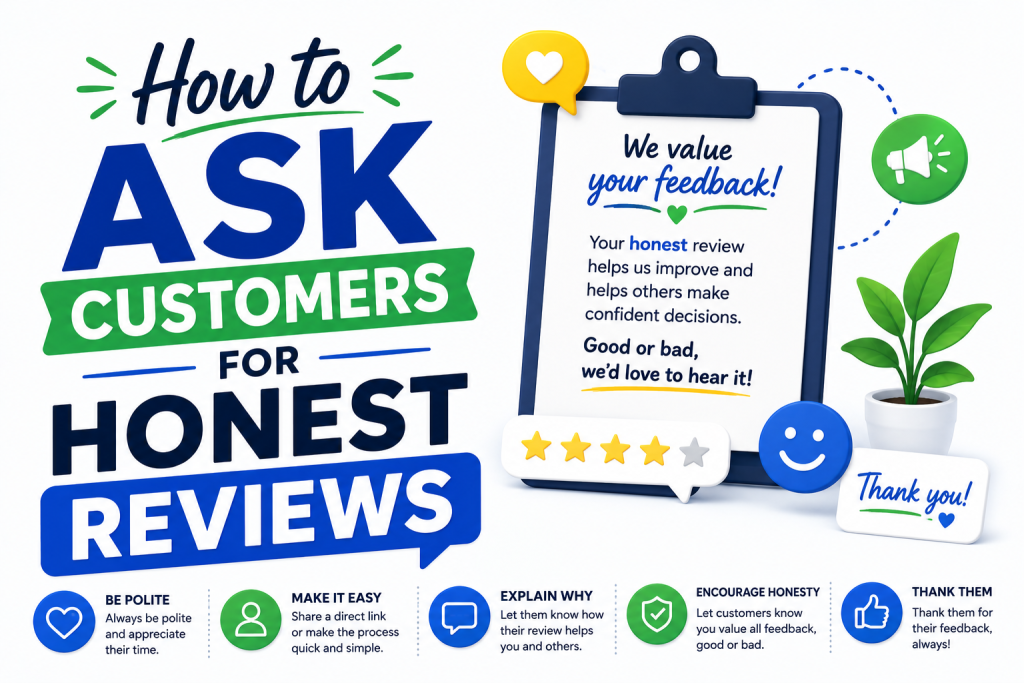
Customer reviews can influence how people see a business before they decide to buy. A thoughtful review can answer questions, reduce hesitation, and give potential customers a better idea of what they can expect.
For businesses, the challenge is not simply getting more reviews. It is encouraging customers to share genuine experiences in a way that feels natural and respectful.
Asking for honest reviews does not need to be complicated. The right timing, message, and approach can make customers more comfortable sharing their opinions.
Why Should You Ask Customers for Reviews?
Many satisfied customers do not automatically leave reviews.
They may have enjoyed their purchase but simply move on with their day. Others may intend to write something later and forget. Some customers may not know where to leave feedback.
A simple request can remind them.
Customer reviews can help businesses understand what they are doing well and where they can improve. They can also help potential customers learn more about the business from another customer’s perspective.
The important point is to ask for feedback rather than trying to control what the customer says.
Ask at the Right Time
Timing can have a major effect on whether a customer responds to a review request.
Asking immediately after an order is placed may be too early because the customer has not experienced the product or service yet.
A better opportunity may come after the customer has received the product, completed the service, contacted support, or had enough time to evaluate their experience.
For example, an online store might send a review request a few days after delivery. A service provider could ask after the work has been completed.
The best timing depends on the type of business and customer journey.
Keep Your Review Request Simple
Customers are busy. A long message explaining why the business needs reviews can make the request feel like work.
A short and friendly request is often easier to respond to.
For example:
“Thank you for choosing us. We would love to hear about your experience. If you have a moment, please share your honest feedback.”
The customer understands what the business is asking without feeling pressured.
Use the Word Honest
There is an important difference between asking for a review and asking for a positive review.
When requesting feedback, make it clear that you want the customer’s honest opinion.
This gives customers permission to share both what they liked and what they believe could be improved.
Honest feedback is useful because it can help a business understand the actual customer experience. It can also make the review process feel more genuine.
Make It Easy to Leave a Review
Even customers who are willing to leave feedback may abandon the process if it takes too many steps.
If possible, provide a direct path to the review page.
Instead of telling customers to search for the business name, find the correct profile, and locate the review section, provide clear instructions or an appropriate review link.
The easier the process is, the less effort customers need to make.
Ask After a Positive Customer Interaction
A good customer interaction can create a natural opportunity to request feedback.
For example, a customer may send a message saying they are happy with the service. They might thank an employee for solving a problem or tell the business that they loved their purchase.
This can be an appropriate moment to invite them to share their experience publicly.
The request should still remain optional.
A customer should never feel that they have to leave a review because they complimented the business.
Personalize the Request
Generic messages can sometimes feel automated.
A small amount of personalization can make the request feel more natural.
Instead of:
“Please leave us a review.”
A business could say:
“Thank you for choosing our team for your recent project. We hope the experience met your expectations. If you have a moment, we would appreciate hearing your honest feedback.”
The second version recognizes the customer’s experience and sounds more conversational.
Do Not Tell Customers What to Write
One of the most important rules when requesting honest reviews is to let customers use their own words.
Avoid giving customers a script that tells them exactly what to say.
You can explain what the review is for, but the experience and wording should come from the customer.
For example, you can ask:
“What did you think about your experience?”
This allows the customer to decide what they want to mention.
You can also ask:
“What did you like most about our service?”
Or:
“Was there anything we could have done better?”
These questions can encourage useful feedback without controlling the answer.
Avoid Asking Only for Five Star Reviews
It may be tempting to ask satisfied customers specifically for a five star rating.
However, if the goal is honest feedback, the request should not dictate the rating.
A better approach is to invite customers to share their experience.
This allows the business to receive feedback that reflects what customers actually think.
It also helps create a healthier relationship between the business and its customers.
Ask Through the Right Communication Channel
Businesses can request reviews through different customer communication channels.
Depending on the business, these may include:
SMS
Post purchase messages
Receipts
Customer support conversations
Follow up calls
Messaging platforms
The best channel is usually one the customer already uses to communicate with the business.
For example, an online business may use a follow up email after delivery. A service business may request feedback through a message after completing an appointment.
Use Email to Request Feedback
Email can work well because it gives customers enough space to respond when convenient.
A simple email might include a thank you message, a short request, and a clear way to leave feedback.
Avoid filling the email with unnecessary information.
The main purpose should be obvious as soon as the customer opens it.
Use SMS Carefully
Text messages can be effective because they are often noticed quickly.
However, businesses should avoid sending too many messages.
A short request after a meaningful customer interaction can be reasonable, while repeated reminders can become irritating.
Keep the message clear, polite, and easy to understand.
Ask for Reviews After Customer Support
Customer support interactions can also create opportunities for feedback.
Suppose a customer contacts a company with a problem and the support team successfully resolves it.
After the issue has been resolved, the business can ask whether the customer would like to share feedback about their experience.
This can provide useful information about the support process.
It can also help businesses identify employees or processes that customers appreciate.
Make Feedback Part of Your Customer Journey
Instead of treating reviews as a separate marketing activity, businesses can include feedback requests naturally within the customer journey.
For example:
Customer places an order.
The order is delivered.
The business checks whether everything went well.
The customer receives a review invitation.
The business monitors the feedback.
The team uses recurring comments to improve the experience.
This approach makes review collection feel like part of customer communication rather than an aggressive promotional activity.
Follow Up Once if Necessary
Sometimes customers intend to leave a review but forget.
A single polite reminder can be useful.
For example:
“Just checking in to see if you had a chance to share your experience. Your honest feedback is appreciated whenever you have a moment.”
Avoid sending repeated reminders.
Too many requests can frustrate customers and may create a negative impression of the business.
Thank Customers for Their Feedback
When someone takes time to leave a review, acknowledge it.
A simple thank you can go a long way.
For positive feedback, the business can express appreciation and mention something relevant from the customer’s comment.
For constructive feedback, the business can thank the customer for bringing the issue to its attention and explain what action is appropriate.
Customers are more likely to feel valued when they know their feedback is being noticed.
Learn From Negative Feedback
Honest reviews will not always be positive.
That is normal.
A negative review can reveal a problem that the business needs to address. Instead of immediately becoming defensive, consider whether the feedback identifies a genuine weakness.
If several customers mention the same problem, it may be worth investigating.
For example, repeated complaints about slow responses could indicate a communication issue. Repeated comments about confusing instructions could suggest that the business needs to improve its information.
Honest reviews can therefore become a source of practical business insight.
Give Customers a Reason to Share Their Experience
Customers may be more willing to leave reviews when they understand why their feedback matters.
A business can explain that customer feedback helps improve services or helps future customers make informed decisions.
Keep the explanation genuine.
For example:
“Your feedback helps us understand what we are doing well and where we can improve. It also helps other customers know what to expect.”
This gives customers context without putting pressure on them.
Avoid Incentivizing Specific Positive Feedback
Businesses should be careful when offering incentives for reviews.
If an incentive is used, the terms should not require a positive rating or favorable wording. The customer should remain free to provide honest feedback.
Businesses should also check the rules of the platform where they are requesting reviews because review platforms may have their own policies regarding incentives and review solicitation.
The safest approach is to focus on customer experience and invite voluntary, genuine feedback.
Create a Consistent Review Request Process
A business does not need to ask every customer in exactly the same way.
However, having a consistent process can prevent review requests from being forgotten.
For example, a business can decide when customers should receive a feedback request based on the type of purchase.
A retail business may ask after delivery.
A service business may ask after the appointment.
A software company may ask after a customer has used the product long enough to form an opinion.
A professional agency may request feedback after completing a project.
The process should match the customer’s actual experience.
Common Mistakes to Avoid
Several mistakes can make review requests less effective.
Asking too early can result in feedback from customers who have not experienced the full product or service.
Asking too frequently can annoy customers.
Providing a review script can make feedback feel unnatural.
Demanding a five star rating can undermine the idea of honest feedback.
Making customers search for the review page can create unnecessary effort.
Ignoring negative feedback can make customers feel unheard.
Avoiding these mistakes can make the entire review process more customer friendly.
Final Thoughts
Asking customers for honest reviews is ultimately about communication.
The strongest approach is not to pressure customers or tell them what to say. It is to provide a good experience, ask at an appropriate time, make the review process simple, and give customers the freedom to share their genuine opinions.
Businesses should view reviews as more than a collection of ratings. They are conversations with customers and a source of information that can help improve products, services, and customer experiences.
When businesses consistently invite honest feedback and act on what customers say, reviews can become a natural part of building trust and maintaining a strong reputation.
Frequently Asked Questions
What is the best way to ask a customer for an honest review?
Keep the request short, polite, and clear. Thank the customer for their business and invite them to share their genuine experience. Avoid telling them what rating or wording to use.
When should I ask customers for reviews?
Ask after the customer has had enough time to experience the product or service. The ideal timing depends on the type of business and the customer journey.
Should I ask every customer for a review?
A business can invite customers to provide feedback as part of a consistent process, but the request should be voluntary. Customers should never feel pressured to leave a review.
Can I ask customers for a five star review?
If the purpose is honest feedback, it is better to ask customers to share their genuine experience rather than requesting a specific rating.
How can I make customers more likely to leave reviews?
Make the process convenient, ask at an appropriate time, use a simple message, and provide a clear path to the review page. A good customer experience is also an important part of encouraging feedback.
Is it okay to send a reminder about a review?
Yes, a single polite reminder may be appropriate when a customer has not responded. Avoid repeated reminders that could become annoying.
Should I offer a reward for leaving a review?
Businesses should be cautious with incentives because review platforms can have rules about incentivized feedback. If incentives are permitted, they should not require customers to leave positive feedback.
What should I say when asking for a review by email?
Keep the email brief. Thank the customer, mention that their honest feedback is valuable, and provide a convenient way to leave a review.
Can I ask customers for reviews through SMS?
Yes, SMS can be an effective channel when used appropriately. Keep the message concise and avoid sending excessive requests.
Should I respond to customer reviews?
Yes. Responding to reviews shows that the business pays attention to customer feedback. Positive reviews can be acknowledged with appreciation, while concerns can be addressed professionally.
What should I do if a customer leaves a negative review?
Read the feedback carefully, remain professional, and determine whether the issue can be resolved. Avoid arguing publicly with the customer. If appropriate, invite them to continue the conversation privately.
Why are honest reviews important?
Honest reviews give potential customers a more realistic understanding of a business. They also help businesses identify strengths and weaknesses in their products and services.
Can honest negative reviews help a business?
Yes. Constructive negative feedback can reveal problems that a business may need to address. Responding professionally and improving the underlying issue can strengthen the customer experience over time.
How often should I ask customers for reviews?
There is no single schedule that works for every business. Review requests should be connected to meaningful customer interactions rather than sent randomly or excessively.
What makes a review request feel genuine?
A genuine request is respectful, simple, and focused on the customer’s experience. Personalizing the message and explaining why feedback matters can also make the request feel more natural.