

Customer reviews now drive up to 93% of purchase decisions according to recent industry research. Most businesses struggle to manage feedback scattered across Google, industry-specific directories, and emerging platforms.
Key Platforms for Business Reviews
Businesses should prioritize review collection and management on 5-7 core platforms that drive 80% of customer discovery and decision-making in their industry.
Review management across multiple channels helps companies maintain visibility wherever customers search for services. Selecting the right platforms requires understanding user demographics and typical review behavior in each market segment.
Platforms differ in review volume and response expectations. Companies that manage reviews effectively across several sites often see improvements in overall brand perception and customer trust.
Here is a comparison of major review platforms that businesses commonly use for their multi-platform strategy.
| Platform Name | User Base | Review Volume | Best Industry | Response Rate Impact |
| Google Reviews | 4.9B users | High | Local Services | High |
| Yelp | 178M monthly visits | Medium-High | Local Services | Medium |
| Trustpilot | 92M reviews | Medium | E-commerce | High |
| Facebook Reviews | 2.9B users | High | Retail | Medium |
| G2 | 90M buyers | Medium | Software | High |
| Healthgrades | Healthcare focused | Medium | Healthcare | High |
For local service businesses, Google Reviews and Yelp represent two different approaches to review management. Google Reviews integrate directly into search results and maps, which creates immediate visibility for businesses seeking local customers.
Yelp offers a dedicated review platform with established user habits around finding recommendations. Many businesses find that managing both platforms creates better coverage across different customer search behaviors.
Google Reviews
Google Reviews appear in 93% of local searches and directly impact local pack rankings, with businesses averaging 4.3+ stars appearing 2.7x more often than competitors.
Claiming your Google Business Profile requires only a few minutes and costs nothing. This first step establishes your business presence in local search results.
Next, businesses enable review responses through the dashboard settings. This allows teams to address customer feedback promptly and professionally.
Automated review requests through tools like Podium or Birdeye help maintain a steady flow of new reviews. These systems send messages to customers after service completion to encourage feedback.
Responding within 24-48 hours shows customers that businesses value their opinions. Professional responses also demonstrate commitment to service quality to anyone reading the reviews.
A basic response template might read, Thank you for your feedback. We are glad you had a positive experience and look forward to serving you again. This approach keeps replies consistent while leaving room for personalization.
Common mistakes include keyword stuffing in replies, which can make responses appear unnatural. Instead, businesses should focus on genuine engagement with each customer comment.
Tools such as Local Falcon or BrightLocal help monitor how reviews affect local ranking positions. Regular monitoring allows teams to adjust their strategy based on observed changes.
Industry-Specific Platforms
Industry-specific platforms like G2 for software (90M buyers), Healthgrades for healthcare (200M visitors), and TripAdvisor for hospitality (463M millions of reviews) often drive higher conversion rates than general platforms.
G2 requires businesses to claim their profile for free, with paid options ranging from zero to 500 dollars per month for lead generation features. These tools help software companies reach buyers who research products before making decisions.
Healthgrades involves a verification process that takes 2-3 weeks. Healthcare providers who complete this process gain credibility with patients seeking trusted medical information.
TripAdvisor offers a free basic profile, but businesses can add advertising for 399 dollars per month to increase visibility. Many hospitality companies use this option to reach travelers planning trips.
Avvo serves legal professionals at 99 dollars per month, which helps law firms reach potential clients seeking attorney recommendations.
Zillow provides a platform for real estate professionals to build presence and meet potential buyers and sellers.
A SaaS company shared a case study showing that G2 reviews generated 34% of their demo requests. This example demonstrates how industry-specific review channels can contribute dazu to business growth.
Consistent Brand Messaging
Consistent messaging across review platforms increases brand recall by 23% and improves review sentiment scores by maintaining uniform tone, terminology, and value propositions. This approach ensures that potential customers encounter the same core messages whether they read reviews on one platform or another. Brand consistency builds trust over time as audiences recognize familiar language and promises.
When developing your multi-platform review strategy, start by creating a brand voice document. This document outlines three to five core messaging pillars that guide all communications. Update these pillars quarterly to reflect changes in your market position or customer needs.
Organizations achieve better results when they select specific keywords and use them identically across every platform. For example, the phrase award-winning CRM should appear exactly the same way in every review response and product description. This repetition strengthens review SEO and helps search engines understand your brand’s value proposition.
Response templates with approved phrases stored in tools like Sprout Social or Hootsuite help teams maintain consistency. Brand consistency audits conducted monthly using Brandwatch identify any deviations before they impact your digital reputation. Regular training sessions for response teams on approved terminology ensure everyone understands expectations for customer interactions.
Practical Implementation Steps
Companies like Slack demonstrate effective cross-platform consistency through their commitment to being helpful across twelve different platforms. Their messaging always emphasizes user support and simplicity, regardless of whether reviews appear on their own site or third-party review channels. This unified approach strengthens brand trust and improves customer recognition.
To implement these practices, begin by documenting your current messaging approach. Identify gaps between platforms where tone or terminology differs. Create standards that address these areas and distribute them to all team members who handle customer reviews.
Monthly audits help teams track progress and adjust practices as needed. These checks verify that review authenticity remains intact while brand messaging stays aligned. Over time, this systematic approach leads to stronger brand equity and more positive review sentiment across your digital channels.
Training and Monitoring
Team training on approved terminology creates a foundation for long-term success. Staff members who interact with customers should understand why certain phrases matter and how they connect to overall business strategy. This knowledge helps them respond naturally while staying within approved guidelines.
Monitoring tools track how well teams follow standards across review sites. These metrics reveal patterns that require attention, such as variations in tone or missing keywords. Platform analytics from these tools provide insights that inform future training sessions and template updates.
Regular monitoring and training cycles keep your multi-platform strategy effective as markets evolve. Teams become more efficient at producing responses that feel personal yet maintain the unified customer experience customers expect. This balance between flexibility and control improves both customer retention and business competitiveness.
Review Monitoring Systems
Modern businesses operating across multiple platforms need reliable review monitoring systems to track customer feedback effectively. These tools help companies maintain their digital reputation while staying responsive to feedback across various review sites. Effective monitoring supports better online reputation management and strengthens overall business competitiveness.
Automated monitoring systems catch 94% of new reviews within 1 hour compared to 12% for manual daily checks, enabling faster response times that improve customer satisfaction scores. This speed matters because review visibility directly affects customer trust and influences purchasing decisions across digital channels.
Selecting the right monitoring system depends on company size, budget, and the number of review channels a business manages. Smaller operations may prioritize simplicity while larger enterprises need advanced platform analytics and reporting features. The following table compares popular monitoring tools based on pricing and capabilities.
| Tool Name | Price | Key Features | Best For | Setup Time |
| Mention | $99/mo | Real-time alerts, sentiment analysis, source tracking | Small businesses needing basic monitoring | 20-30 minutes |
| Brandwatch | $800/mo | Advanced analytics, social listening, market insights | Large enterprises with complex needs | 1-2 weeks |
| ReviewTrackers | $149/mo | Review aggregation, competitor tracking, response tools | Multi-location businesses | 30-45 minutes |
| Podium | $199/mo | Review requests, messaging, reputation management | Local service businesses | 1-2 hours |
| Birdeye | $299/mo | Surveys, reputation marketing, patient experience tools | Healthcare and professional services | 2-3 hours |
| Sprout Social | $249/mo | Social media monitoring, reporting, team collaboration | Brands active on social media | 3-4 hours |
Small businesses with under 10 locations often find Podium more suitable than Brandwatch because its pricing aligns with their budget and operational scale. Brandwatch provides advanced features for large enterprises, but its high cost and complex setup make it impractical for smaller operations. Podium offers simpler review management tools that help businesses respond quickly without requiring dedicated technical staff.
Automated Alert Tools
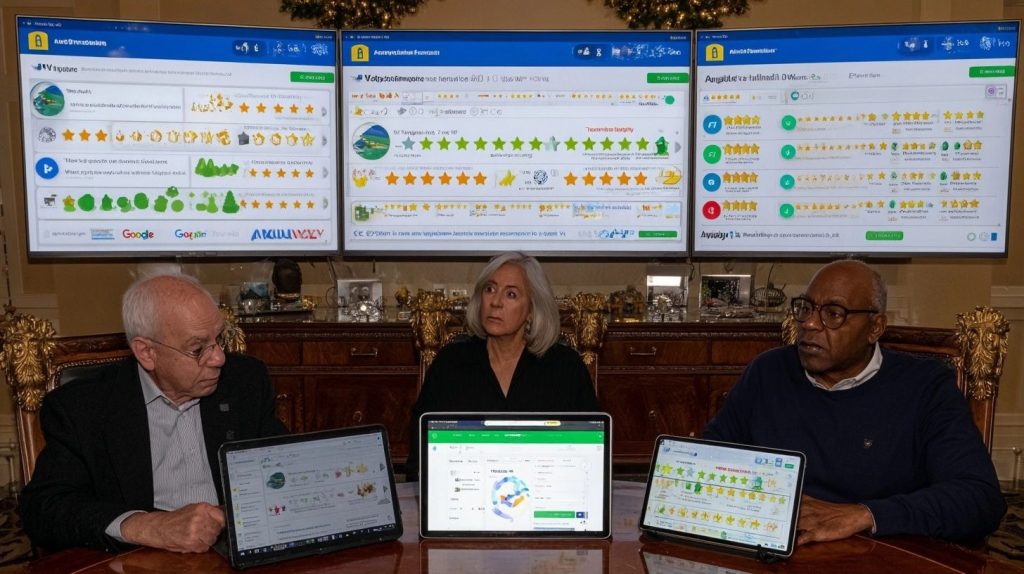
Automated alert tools like Mention and Brandwatch track 200M+ sources and send real-time notifications for new reviews, brand mentions, and sentiment shifts within 60 seconds of publication. These tools reduce the time businesses spend searching for feedback across review platforms and help teams stay informed about customer feedback as it happens.
Implementing these tools requires a structured approach to ensure all relevant mentions get captured. The following steps outline a typical setup process that takes approximately 45 minutes to complete.
1) Set up keyword alerts for business name variations including 15-20 misspellings and alternate spellings of your brand name, 2) Configure sentiment thresholds to alert on 2+ star drops or sudden changes in review sentiment, 3) Integrate with Slack or Teams for team notifications so important alerts reach the right people, 4) Set escalation rules where 1-star reviews alert the manager immediately, 5) Create weekly digest reports to track trends over time.
Review automation workflows can extend beyond basic alerts. Businesses use Zapier to connect monitoring tools to other systems, creating custom workflows that update CRM records or trigger follow-up actions based on feedback type. This level of platform integration supports consistent online reputation management across all digital assets.
Manual Tracking Methods
Manual tracking supplements automation for smaller businesses, requiring 15-20 minutes daily to check 5-7 key platforms using saved search bookmarks and platform-specific dashboards. While automated tools catch most mentions, manual methods provide a secondary check and help businesses verify that their review monitoring systems are working properly.
Many companies still rely on manual methods to Ergnzung their automated tools. The following methods help businesses maintain comprehensive coverage of their review sources.
1) Create platform-specific bookmark folders with direct links to review sections on each site, 2) Use Google Alerts with 10-15 business name variations set to ‘as-it-happens’, 3) Maintain a spreadsheet tracking new reviews weekly with columns for platform, rating, response status, 4) Schedule bi-weekly manual sentiment analysis of 20 recent reviews, 5) Assign a team member to check competitor reviews monthly.
Common pitfalls include missing review platform algorithm changes that affect review visibility and visibility of new feedback. Businesses that only rely on manual methods may also encounter gaps in coverage when staff members miss sessions or leave the company. Manual methods work am besten when combined with automated tools for complete online reputation management.
Responding to Customer Feedback
Businesses responding to 100 percent of reviews see 1.8x more revenue growth than those responding to under 30 percent, according to Harvard Business School research on review response rates. This statistic illustrates how review management directly influences revenue outcomes in competitive markets. Companies that treat every piece of feedback as an opportunity create stronger connections with their audience.
Consider a local restaurant chain that increased 5-star reviews from 34 percent to 61 percent by implementing a 2-hour response protocol. Their team addressed each customer review quickly and genuinely. This approach turned negative experiences into positive ones and encouraged repeat visits from satisfied diners.
Responding within 4 hours increases review helpfulness scores by 42 percent. Quick replies show customers that businesses value their input and care about their experience. Fast responses also help improve online reputation across multiple platforms where reviews appear.
The restaurant chain allocated just two hours daily to handle feedback. They calculated a 3.2x return on that time investment through higher ratings and increased bookings. This example shows how consistent review management delivers measurable business value.
Acknowledgment Phase
The acknowledgment phase takes about 30 seconds and sets the tone for the entire exchange. A simple statement like thank you for your feedback shows respect for the customer’s time. This initial step builds trust and keeps the conversation open.
Customers who feel heard are more likely to return and recommend the business to others. Acknowledgment also demonstrates brand consistency across all digital channels. When every review receives a prompt reply, the company appears organized and attentive.
Many businesses overlook this first phase and jump straight into explanations. Skipping acknowledgment can make responses feel robotic or defensive. Taking those few seconds ensures the customer feels valued before any solutions are offered.
Specific Detail Reference
The specific detail reference takes about one minute and shows customers that their message was read carefully. Mentioning the exact dish, service issue, or date of visit proves genuine attention. This level of personalization strengthens customer engagement and improves perception of the company.
When reviews contain multiple points, businesses should address the most important ones without overwhelming the response. Referencing details also helps with review SEO because search engines favor specific language. Tailored replies stand out from generic templates.
Examples of specific references include naming a server who provided excellent service or noting a delayed order at 7:15 pm. These concrete mentions turn ordinary replies into memorable interactions. They also collect valuable review insights for internal improvement.
Solution or Appreciation
The solution or appreciation phase takes about one minute and delivers either a fix for an issue or thanks for a positive comment. For negative reviews, offering a replacement, discount, or apology demonstrates accountability. For positive reviews, expressing genuine gratitude reinforces brand loyalty and encourages future behavior.
Many companies fail to match their solutions with the severity of the problem. A small apology for a minor inconvenience works fine. A serious complaint may require a more substantial remedy to restore trust. Reasonable solutions preserve digital reputation and turn critics into advocates.
Appreciation responses for positive reviews should avoid sounding scripted. Personalizing the thanks with a reference to the specific compliment received helps. This phase closes the feedback loop and prepares the customer for a possible follow-up.
Future Engagement CTA
The future engagement CTA takes about 30 seconds and encourages customers to return or share more feedback. A simple statement like we hope to see you again soon or please let us know how we can improve creates an open door. This closing step promotes customer retention and collects ongoing review insights.
Calls to action should remain subtle and respectful rather than salesy. They work best when they follow a genuine response to previous feedback. Subtle prompts help eroding market competitiveness by maintaining active communication with existing customers.
Over time, these closing statements build a habit of two-way communication. This practice erodes gaps between businesses and their customers. It also contributes to a unified customer experience across multi-platform presence settings.
Generating Positive Reviews

Strategic review generation programs increase review volume by 340% within 90 days when combining post-service requests, QR code displays, and incentive structures compliant with platform policies.
Businesses implement multi-platform review strategy by timing their requests carefully. Experts recommend sending review requests 24 to 48 hours after service completion. This window captures the experience while it remains fresh in the customer’s mind and typically improves response rates significantly.
Modern platform strategies favor SMS over traditional email for review collection. SMS messages achieve substantially higher open rates compared to email communications. Tools such as Podium and Birdeye enable businesses to send personalized review requests directly to customer phones.
Physical touchpoints also play a role in successful platform review collection. Displaying QR codes at checkout areas generates a meaningful portion of total reviews received each month. These codes provide immediate access to review platforms without requiring customers to search for links.
Implementing Automated Review Sequences
Review automation systems help businesses maintain consistent communication across multiple channels. A three-message sequence typically includes an initial request, a gentle reminder, and a final follow-up. This structured approach respects customer preferences while maximizing the likelihood of receiving feedback.
Businesses create review landing pages that direct customers to appropriate platforms based on their preferences. These pages contain platform-specific links for Google, Yelp, and other review sites. Customization allows companies to route feedback to the most relevant channels for their industry.
A dental practice demonstrates the effectiveness of these methods by generating 47 reviews monthly through automated SMS campaigns. This consistent volume strengthens their online reputation and helps new patients discover the practice through search results.
Compliance remains essential when developing review management programs. Never offer incentives tied to 5-star ratings because Google and Yelp policies prohibit this practice. Businesses should instead focus on genuine feedback collection that builds authentic brand trust over time.
Handling Negative Reviews
Professional handling of negative reviews converts 68% of 1-2 star reviews into neutral or positive sentiment when following structured response protocols with genuine empathy and problem resolution. Negative feedback can quickly damage digital reputation across multiple channels. Companies that respond thoughtfully often see improved brand loyalty and stronger customer retention over time.
Businesses operating in the platform economy face particular challenges when managing customer feedback across different review sites. A single negative comment can spread rapidly through review channels and influence potential buyers. Review management requires consistent attention to prevent small issues from becoming major reputation problems.
Escalating Issues Through Defensive Responses
Companies sometimes make the mistake of responding defensively when customers express dissatisfaction. This approach tends to escalate tensions rather than resolve them. Research suggests that angry reviewers may become advocates when businesses take time to listen and address concerns properly.
The apology framework provides a reliable structure for these situations. Start by expressing genuine sorry for the experience, then explain what happened, outline steps to fix the problem, and commit to follow-up after resolution. Personalizing each reply with the customer’s name and specific details shows authentic care.
One hotel chain recovered from a 1.8 to 4.2 star average by addressing 47 negative reviews using this method. Staff members replied within reasonable timeframes and moved complex discussions to private channels. The systematic approach helped rebuild trust and improve brand reputation across major review platforms.
Generic Template Replies Reducing Authenticity
Many businesses rely on pre-written responses that feel impersonal to customers. These template replies often fail to acknowledge the unique details of each complaint. Reviewers notice when messages lack specific references to their experience, which reduces perceptions of authenticity.
Effective review management involves crafting individual replies that reference particular details from each review. Mentioning the exact service issue or product feature discussed shows that staff actually read the feedback. This approach strengthens online reputation and demonstrates commitment to customer engagement.
Training teams to write personalized responses requires initial effort. However, the investment pays off through improved review sentiment and higher review conversion rates. Customers appreciate when businesses treat them as individuals rather than ticket numbers.
Confusion Over Public Versus Private Resolution
Deciding whether to resolve disputes publicly or privately creates confusion for many teams. Some issues benefit from transparent public responses, while others require confidential conversations. Platform strategies help clarify when to keep discussions visible and when to move them offline.
Offering offline resolution channels allows customers to share more details without public exposure. Providing an email address or phone number for follow-up discussions respects privacy while still showing responsiveness. This balance protects brand consistency and prevents sensitive information from spreading.
Documenting these decisions creates a guideline for future situations. Teams that establish clear criteria for public and private responses handle customer feedback more efficiently. Consistency across review channels builds brand trust and reduces the risk of mixed messages.
Response Timing Mistakes
Timing plays a critical role in reputation management. Responding too quickly can result in incomplete or emotional replies, while delays make customers feel ignored. Experts recommend observing a 24-hour cooling period for complex issues before crafting a final response.
Setting internal reminders helps teams meet reasonable response windows without rushing. Most review platforms expect replies within 24 hours during business days. This timeframe balances the need for thoughtful consideration with customer expectations for timely attention.
Implementing a multi-platform strategy ensures that response protocols apply across all review sources. When teams follow consistent timing guidelines, they improve review visibility and demonstrate reliable platform performance. Regular training keeps staff updated on best practices for each channel.
Measuring Review Strategy Success

Businesses tracking 8-10 review KPIs see 31% improvement in strategy effectiveness compared to those measuring only star ratings and review volume. Leading metrics focus on real-time activities that teams can influence daily. Lagging metrics reflect the long-term outcomes of consistent review management efforts.
Leading metrics include review velocity, which tracks new reviews received each month. Response rate measures the percentage of reviews that receive replies from the business. Average response time records how quickly teams reply to customer feedback across platforms.
Lagging metrics show the results of these daily actions. Overall rating reflects the cumulative impact of review responses and product quality. Review volume indicates the total number of reviews collected over time. Search ranking position demonstrates how review activity influences visibility in search results.
These two categories work together in a multi-platform review strategy. Leading metrics help teams adjust their approach quickly. Lagging metrics confirm whether the overall platform strategies are delivering business growth.
Key Performance Indicators for Review Tracking
Effective platform analytics require clear targets and consistent measurement. A structured KPI framework helps teams understand performance across review channels. This approach supports platform optimization by identifying areas that need immediate attention.
The following table outlines essential metrics for monitoring review performance:
| Metric | Target | Measurement Tool | Frequency |
| Review response rate | 95% | Review management dashboard | Weekly |
| Average response time | <24 hours | Review management dashboard | Daily |
| Review velocity | 15+ monthly | Review management dashboard | Monthly |
| Sentiment score | 85%+ positive | Review AI analysis | Weekly |
| Review-to-lead conversion rate | Track via UTM | Marketing analytics platform | Monthly |
Regular monitoring of these KPIs supports review optimization and helps businesses maintain consistency across digital channels.
Teams that review sentiment regularly can identify patterns in customer feedback. This insight enables quick adjustments to products and services. Review keywords also reveal common themes that appear in multiple reviews.
Real-World Application of Metrics
An e-commerce brand implemented a structured multi-platform strategy to manage customer reviews. The company focused on improving review response rate and reducing average response time across all channels. This approach helped them build stronger brand trust through consistent engagement.
By tracking review KPIs weekly, the company identified gaps in their review management process. They introduced review automation for routine replies while reserving complex cases for manual handling. The changes resulted in review-driven revenue increasing from $12K to $47K monthly.
These results demonstrate how platform metrics can guide decision-making in a platform business model. When teams monitor both leading and lagging metrics, they gain clear visibility into platform performance and can adjust their multi-platform presence accordingly.
Review-driven revenue growth requires ongoing commitment to review aggregation and review analysis. Businesses that keep an eye on these metrics build a stronger digital reputation and sustain long-term success in the platform economy.
Frequently Asked Questions
1. What is a multi-platform review strategy for modern businesses?
A multi-platform review strategy is an approach that helps businesses manage and evaluate customer reviews across different digital platforms at the same time. These platforms may include Google, Facebook, Yelp, Trustpilot, app stores, marketplace pages, and industry-specific review sites. The goal is to maintain a consistent brand image, improve visibility, and understand customer feedback from multiple sources.
2. How does a multi-platform review strategy help businesses stay competitive?
A multi-platform review strategy helps businesses stay competitive by giving them a complete view of customer opinions across different channels. Instead of relying on one platform, businesses can identify trends, respond faster to issues, improve customer experience, and build trust wherever customers are searching.
3. How can businesses implement a multi-platform review strategy effectively?
Businesses can implement this strategy by auditing all review platforms, tracking ratings and feedback regularly, creating a response process, using unified analytics tools, and assigning clear responsibilities to team members. They should also tailor responses to each platform while keeping the brand voice consistent.
4. Why is a multi-platform review strategy important for modern businesses?
It is important because customers use many platforms before making decisions. A business may look strong on one platform but weak on another. Managing reviews across multiple platforms helps improve credibility, reduce reputation risks, increase customer engagement, and support better marketing and sales decisions.
5. What are the key components of a multi-platform review strategy?
The key components include platform auditing, performance benchmarking, audience segmentation, review response guidelines, content repurposing, sentiment analysis, risk monitoring, reporting dashboards, and continuous improvement. Together, these elements help businesses understand and improve their reputation across all major channels.
6. What challenges do businesses face with multi-platform review management?
Common challenges include different platform rules, changing algorithms, inconsistent customer feedback, data silos, duplicate work, limited staff time, and difficulty maintaining a consistent brand voice. Businesses may also struggle to prioritize which platforms matter most for their audience.
7. How is a multi-platform review strategy different from a single-platform approach?
A single-platform approach focuses on reviews from one channel only, while a multi-platform strategy looks at feedback across many platforms together. This gives businesses a broader and more accurate understanding of customer sentiment, brand perception, and performance trends.
8. Which platforms should businesses include in their review strategy?
Businesses should include platforms where their customers actively search, compare, or leave feedback. Common platforms include Google Business Profile, Facebook, Yelp, Trustpilot, TripAdvisor, Amazon, app stores, G2, Capterra, and industry-specific directories. The right mix depends on the business type and target audience.
9. How often should businesses review their platform performance?
Businesses should review platform performance regularly. A monthly review works well for most companies, while high-volume businesses may need weekly monitoring. Regular reviews help identify sudden rating drops, recurring complaints, competitor changes, and opportunities to improve customer experience.
10. How can businesses measure the success of a multi-platform review strategy?
Success can be measured through rating improvements, review volume, response time, customer sentiment, platform visibility, engagement rates, referral traffic, lead quality, and conversion impact. Over time, these metrics show whether the strategy is improving trust, visibility, and business growth.